
ED Modbus Introduction to Modbus TCP
Using Modbus TCP with Brainboxes Products
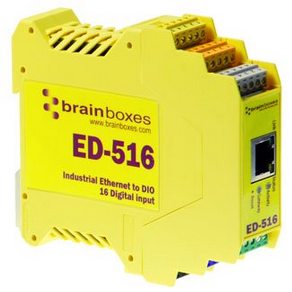
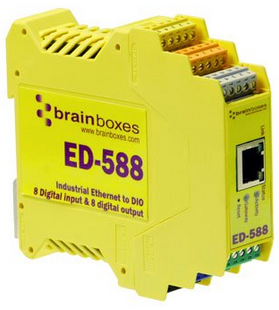
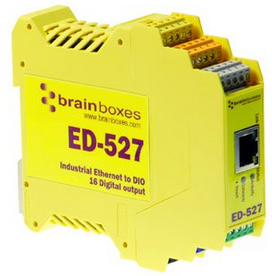
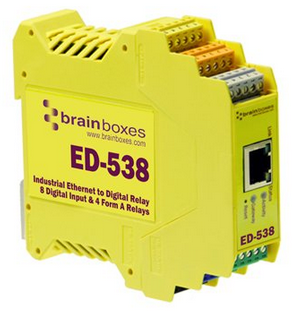
This manual applies to the following Ethernet I/O products:
Scope of This Document
This document describes the implementation of the Modbus TCP protocol with the Brainboxes Ethernet I/O (ED) product range. The document will explain what the protocol is, how it works and how to use it with Brainboxes ED range.
What is Modbus TCP?
Modbus Protocol is a messaging structure developed by Modicon in 1979. It is used to establish master-slave/client-server communication between intelligent devices. It is a de facto standard, truly open and the most widely used network protocol in the industrial manufacturing environment. It has been implemented by hundreds of vendors on thousands of different devices to transfer discrete/analog I/O and register data between control devices.
TCP/IP is the most common transport protocol used over the Internet which is actually a set of layered protocols, providing a reliable data transport tool between machines.
Combining a widespread physical network (Ethernet) with a universal networking standard (TCP/IP) and a vendor-neutral data representation, Modbus gives a truly open, accessible network for exchange of process data.
Modbus TCP/IP has become popular due to its openness, simplicity, low-cost development, and minimum hardware required to support it.
The Modbus protocol is located within the seventh layer of the OSI model, the application layer. Modbus allows client/server communication between devices connected on different types of buses and networks.
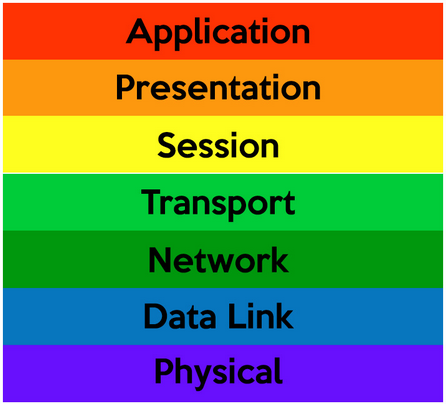
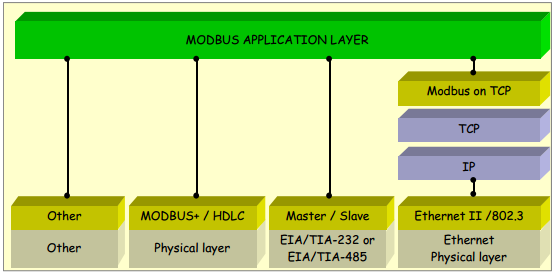
Modbus is a request/reply protocol and offers services specified by function codes. Modbus function codes are elements of Modbus request/reply PDUs.
Modbus Implementations
There are currently three implementations of Modbus:
- TCP/IP over Ethernet - Supported by Brainboxes ED products
- Asynchronous serial transmission over a variety of media (wire: EIA/TIA-232-E, EIA-422, EIA/TIA-485-A; fiber, radio, etc.) - Not implemented in our products
- Modbus PLUS - A high speed token passing network - Not implemented in our products
Device Types
A communicating system over Modbus TCP/IP may include different types of device:
- A Modbus TCP/IP Client and Server devices connected to a TCP/IP network
- Interconnection devices like bridge, router or gateway for interconnection between the TCP/IP network and a serial line sub-network which permit connections of Modbus Serial line Client and Server end devices